
From PDF to structured invoice, automatically
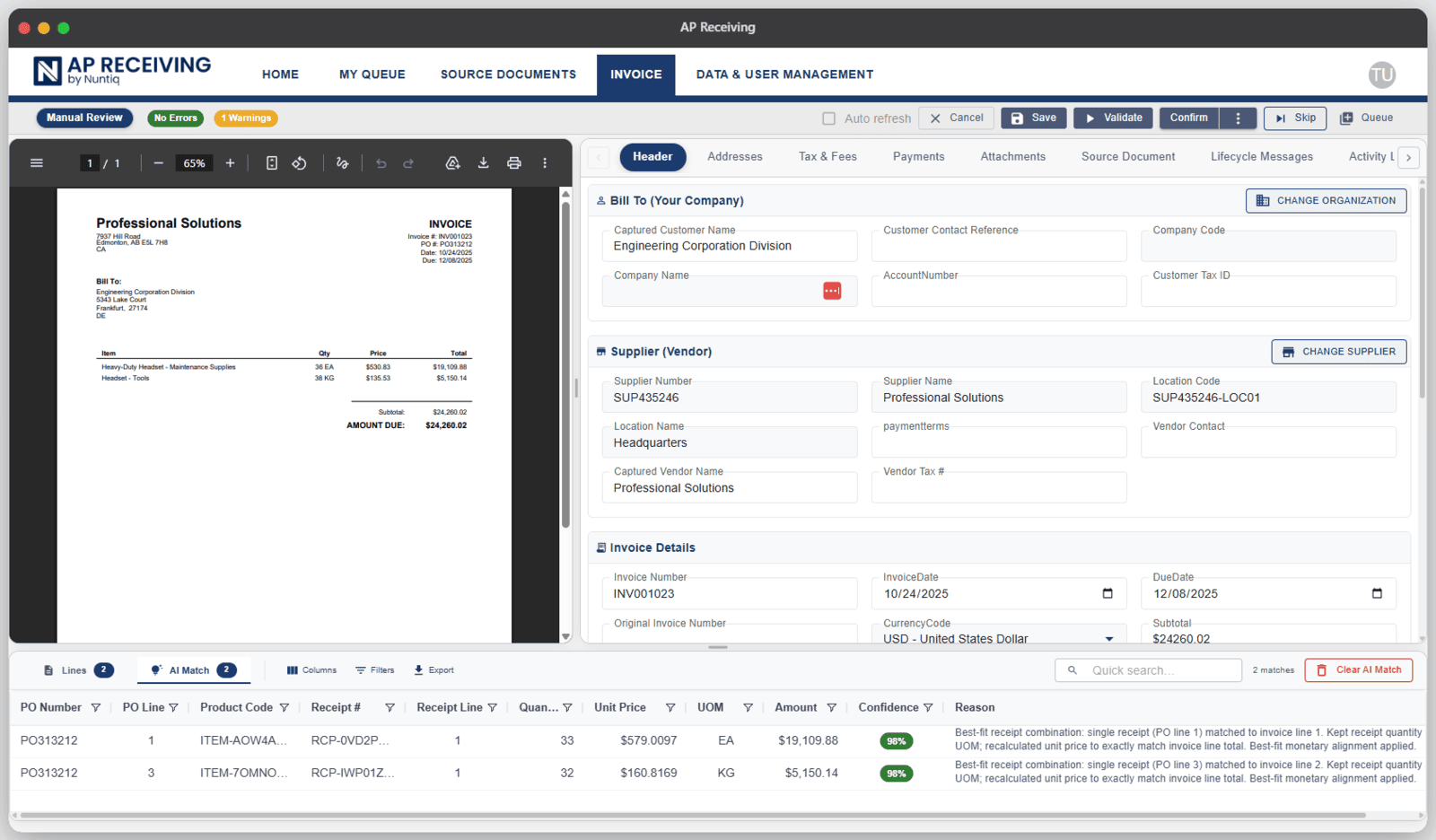
Once an invoice arrives, Nuntiq does the rest. Text extraction, visual capture for scans, AI splitting for multi-invoice documents, and context-aware extraction for all invoice data. The original is archived immutably; the structured data feeds the next stage.
- Native PDF text extraction for digitally-created invoices
- OCR fallback for scanned PDFs
- Format-independent data extraction, not template-based
- Supplier-specific extraction instructions in plain language
- Automatic instruction selection when vendors send directly
Intelligent Data Extraction
Nuntiq reads PDF invoices the way a person would. It extracts text from native PDFs or uses OCR for scanned PDFs, then interprets the content to identify invoice numbers, dates, amounts, line items, and more.
Define supplier-specific instructions in plain language to handle each vendor's unique format. When suppliers send directly to your Nuntiq address, the right instructions are applied automatically based on the sender.
Invoice Splitting, Without the Arts and Crafts Project
Other vendors will happily split your invoices for you. You just have to print the batch, grab your scissors and a stack of blank paper, slide a separator page between each invoice, re-scan the whole thing, and pray nobody sneezed on the barcode. Congratulations. You are now the automation.
Nuntiq's AI actually reads the document. It knows where one invoice ends and the next one starts the same way you do, by looking at it. No blank pages. No barcodes. No "best practices guide" that is secretly just instructions for doing it yourself.
Drop in the PDF. Get back invoices. That is the whole bit.
- Automatic boundary detection on combined PDFs
- No separator pages, barcodes, or cover sheets required
- Works on multi-invoice scans and digital batches alike
- Each split invoice stored as its own immutable original
The original is preserved, untouched
Every document that enters Nuntiq is stored as an immutable original. Source files cannot be modified or deleted after ingestion. That's what makes the audit trail meaningful: extracted data can always be checked against the unchanged source, and document retention obligations have a clean answer.